Machu Picchu: No Photo Has Ever Done It Justice (4/6)
There is a reason it is one of the seven wonders. Standing there, you finally understand why. (Part 4 of 6)
Part 4 of the Peru series · Updated for Travel with Sheridan
 We boarded an early train from a station outside Cusco and settled in for the three-hour ride to Aguas Calientes, the small town at the base of Machu Picchu. The journey itself is worth paying attention to. The train follows the Urubamba River down through the valley, past terraced hillsides and small farms and villages, the mountains getting bigger and closer as you go. They served a light breakfast. We mostly just looked out the window.
Aguas Calientes is its own small adventure. There are no cars in the main part of town. Everything moves on foot, up and down narrow roads lined with colorful shops and restaurants, connected by what feels like an unreasonable number of stairs. Our hotel was charming and our guide, Esmerelda, was waiting for us. She would turn out to be one of the best guides of the whole trip: deeply knowledgeable, entertaining, and clearly in love with the place she was about to show us.
The Road Up
Buses run from Aguas Calientes up to Machu Picchu on a dirt road that switchbacks up the mountain in a series of sharp turns that the drivers handle with total calm. There are no guardrails on most of it. When buses coming down need to pass, the ones going up back up to let them through. Some passengers found this more exciting than others. We made it to the top intact and got our first glimpses of the site through the gates.
That First View
I have seen hundreds of photos of Machu Picchu. I thought I knew what to expect. I did not.
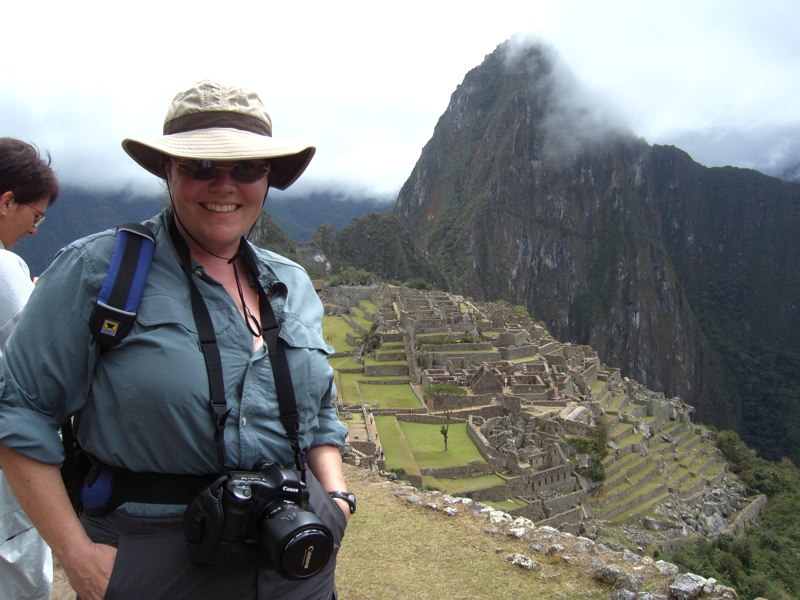
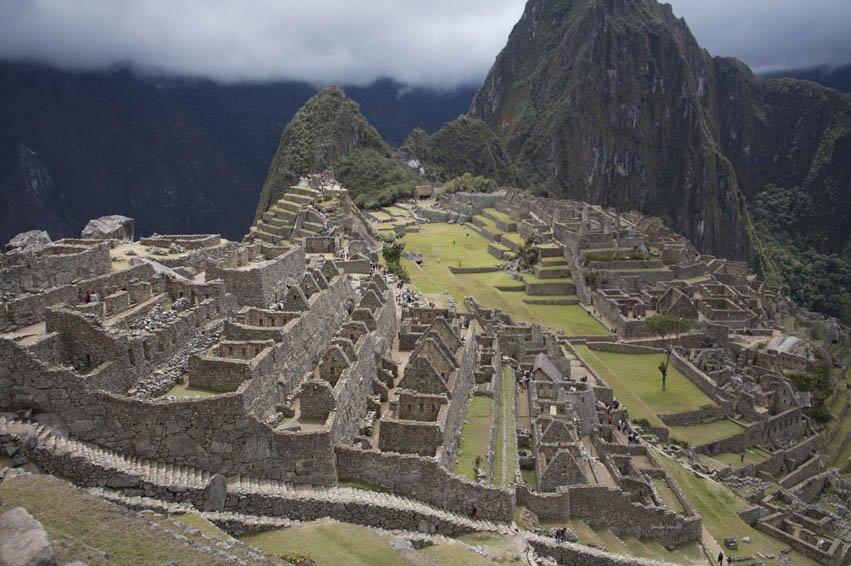
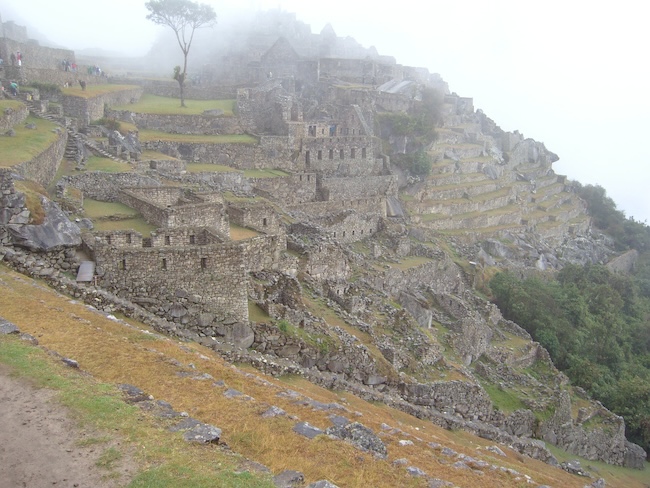
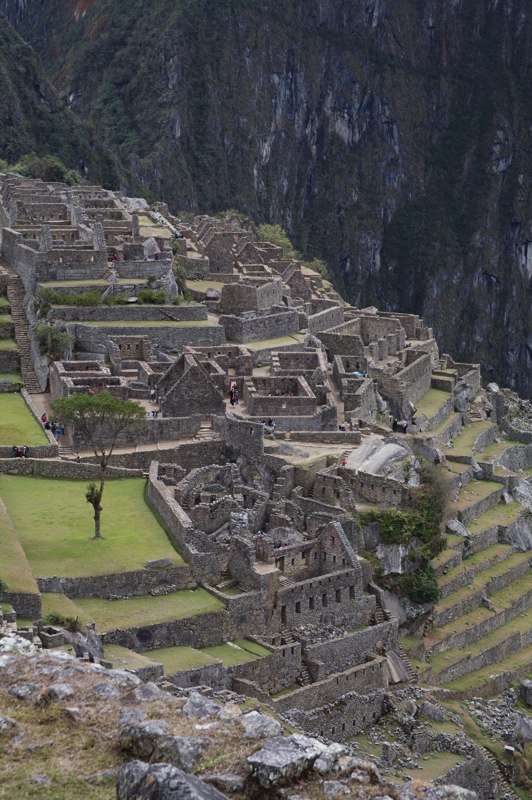
We worked our way up to the guard tower near the entrance, a three-walled structure with windows that frames the classic panoramic view of the ruins. When I looked out, I felt my breath actually catch. It was bigger than I had imagined, more intricate, more alive somehow. Machu Picchu sits on top of a mountain completely surrounded by a valley, with the Andes rising on every side. The scale of it, the setting, the fact that it exists at all: none of that comes through in photographs. You have to be standing there.
When Hiram Bingham rediscovered the site in the early 1900s, it was completely overgrown. The Spanish never found it, which means it escaped the systematic destruction they applied to most of what the Incas built. Nobody knows exactly what Machu Picchu was for. Theories range from a royal retreat to a religious center to a kind of university for the Incan elite. The Incas had no writing system, which means they left no records, which means we are left with beautiful, fascinating guesswork. This is precisely when a time machine would be most useful.
What Esmerelda Showed Us
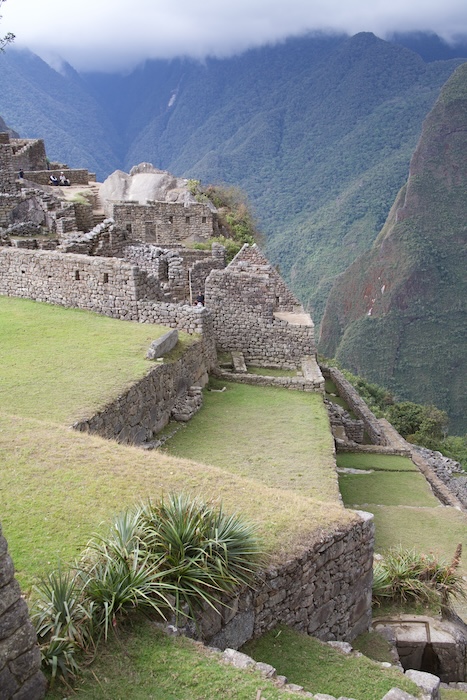
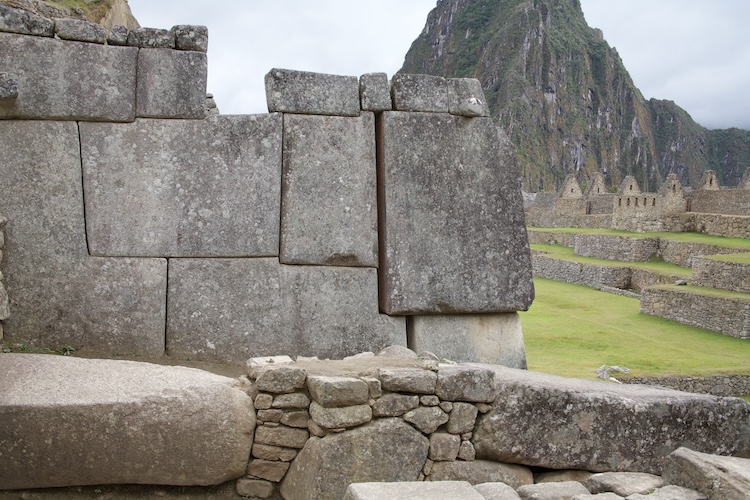
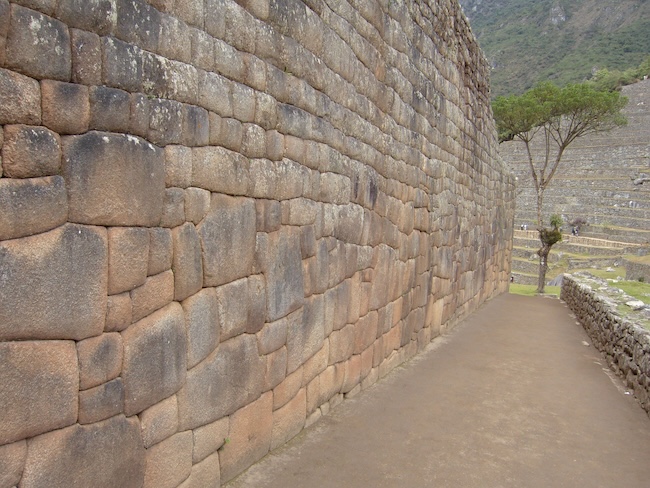
The architecture moves from rougher construction at the lower levels to increasingly refined and complex masonry higher up. The terraces descend the mountain in long, sweeping steps and were used for agriculture, with new crops introduced at the bottom and gradually moved upward as they acclimatized to the altitude. More terraces are still being discovered.
The astronomical elements are everywhere once you know to look for them. There is a room that marks the exact day of the summer and winter solstices. Rocks that align with constellations at specific times of year. A solar clock for tracking seasons. The Incas were working all of this out with naked-eye observation and extraordinary precision, in roughly 100 years of civilization. That last part is the one that keeps stopping me: 100 years. Everything you see at Machu Picchu, Ollantaytambo, Sacsayhuaman, all of it, was accomplished in about a century. Some of the bodies found at the site have been estimated to be over 100 years old at death, at a time when life expectancy elsewhere in the world was 40 to 50. They were doing something right.
A natural spring feeds water channels that still flow through the city. The walls all lean slightly inward in a trapezoidal shape, the same structural principle that kept Inca buildings standing through earthquakes that leveled everything the Spanish built. There is even a chamber where you can speak into a small window and be heard clearly across the room. The engineering is relentless.
The Inca Drawbridge
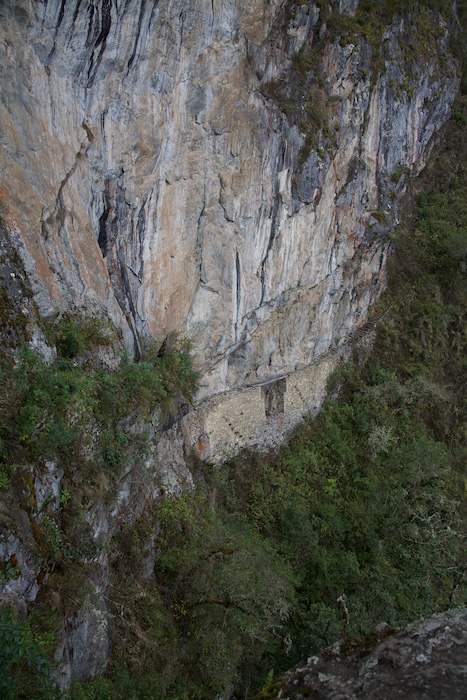 After the main tour, Esmerelda accompanied me on the hike out to the Inca Drawbridge. It is a fairly easy walk along a narrow path that rounds the mountain above some genuinely steep dropoffs, so if heights are not your thing, this one requires some nerve. The drawbridge itself is built into a sheer cliff face: two stone walkways with a gap in the center that was originally spanned by wooden planks. Remove the planks and Machu Picchu becomes essentially unreachable from that direction. Simple, elegant, and very effective.
On the way back I spotted something on the face of Huayna Picchu, the younger, steeper mountain that looms above the ruins. Little colored dots moving slowly up the rock. People. Esmerelda told me there were more ruins up there. I filed that information away and started making a plan.
Important planning note: Machu Picchu now operates on a timed entry system with strict capacity limits, and tickets sell out well in advance, especially in peak season. The logistics have changed considerably since I traveled there. Book tickets before you leave home, not when you arrive. Check the official Peruvian government ticketing site for current pricing, entry windows, and circuit options, and verify whether Huayna Picchu requires a separate ticket, which it did when we visited and likely still does.
On the bus: Buses run frequently from Aguas Calientes to the ruins starting at 5:30 am. Buying tickets in advance the evening before saves time in the morning, which matters if you are trying to catch an early entry window.
On Aguas Calientes: It earns its name. There are hot springs in town. After a full day of climbing ruins, they are an excellent idea.
Back in Aguas Calientes that evening, I bought my tickets for the next morning and set my alarm. The decision to climb Huayna Picchu was made with the kind of logic that only makes sense when you are already there: when else was I going to be in Peru?
That story gets its own post.