Huayna Picchu: The Climb You Will Not Regret (5/6)
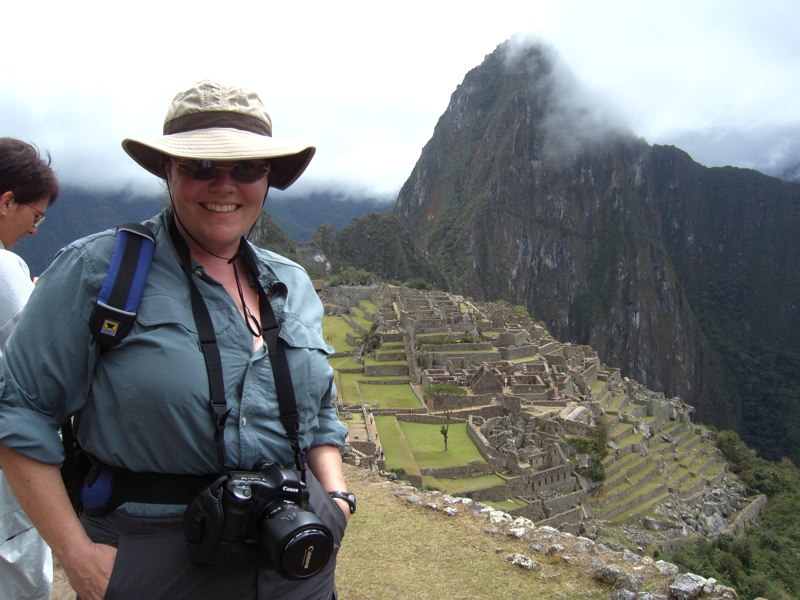
Early alarm, steep trail, low clouds, and a view that made every single one of those things worth it.
Part 5 of the Peru series · Updated for Travel with Sheridan
The debate happened while I was falling asleep. Early morning. Another admission ticket. Another bus fare. We were leaving on the afternoon train back to Cusco. Was it worth it?
Then I thought: when else am I going to be here? I set the alarm and went to sleep.
The peak in the background is Huayna Picchu - the star of this particular adventure.
The scramble to get there
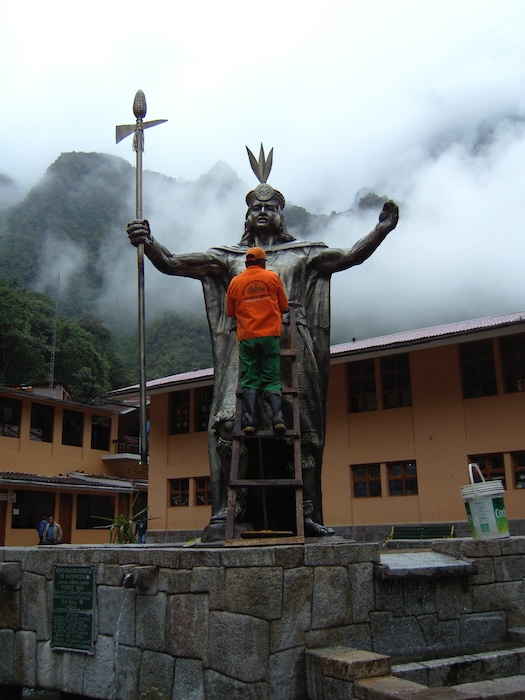 I woke up slightly late, at 5:30, and slipped out quietly to sort out the logistics I had not quite finished the night before. First, find the ticket office for Machu Picchu admission. Then find the bus depot. Then get in line. By the time I boarded the bus and started up the switchbacks, I was fully awake in the way that only a slightly chaotic early morning can accomplish.
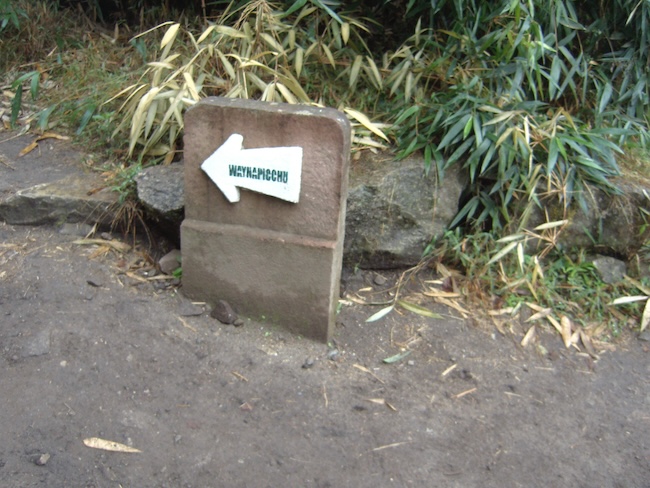
Huayna Picchu, for context: it is the steep, dramatic mountain that looms behind Machu Picchu in essentially every famous photograph of the site. Machu Picchu means "old mountain." Huayna Picchu means "young mountain." Only 400 people are permitted to make the hike each day, split into two waves. Miss the first wave and you wait until 10am for the second. I had no idea what number I was going to be when I joined the line.
I was number 164. In by one wave, with room to spare. Sometimes things work out.
The Climb
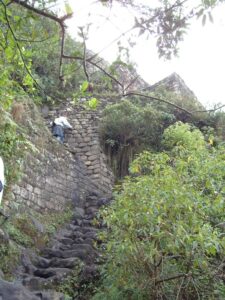
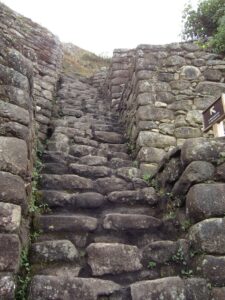
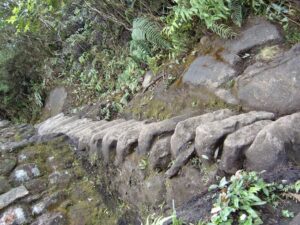
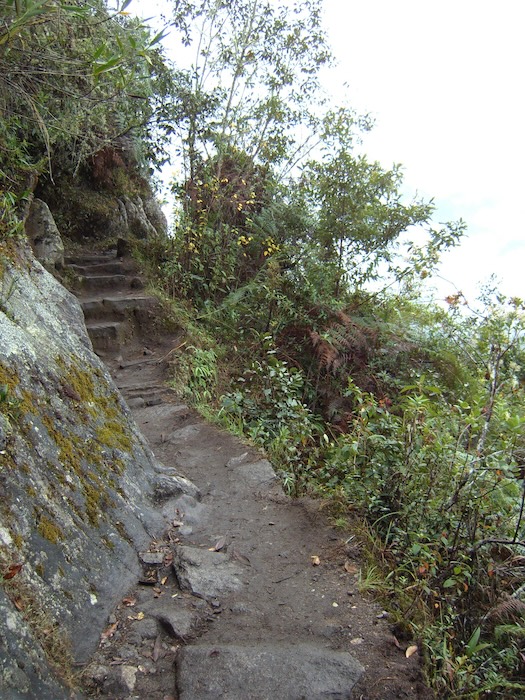
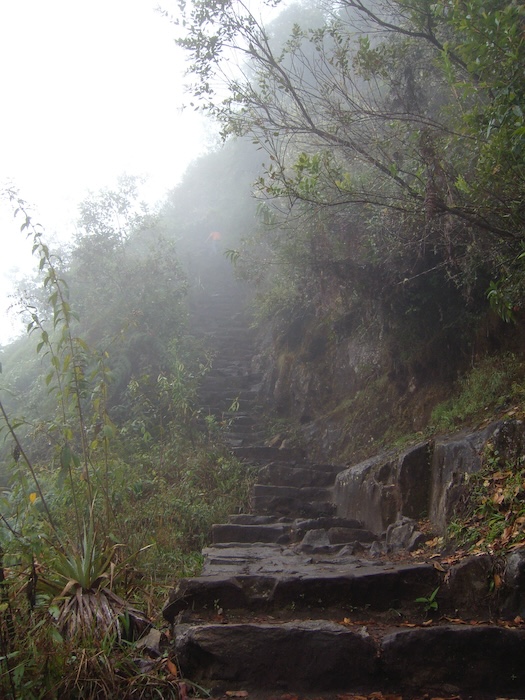
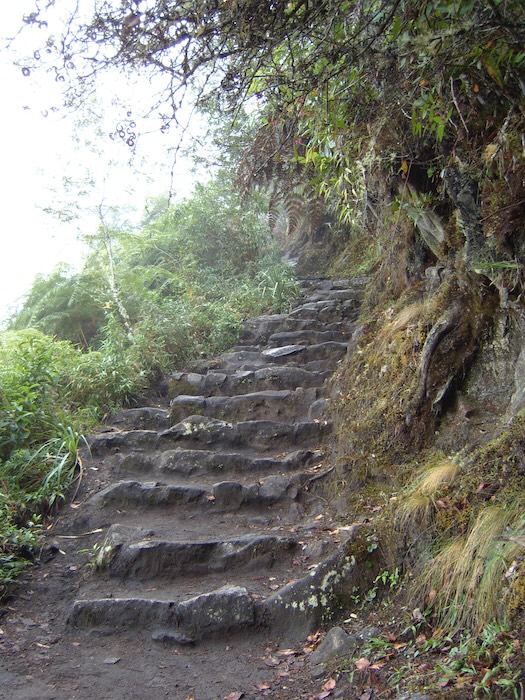
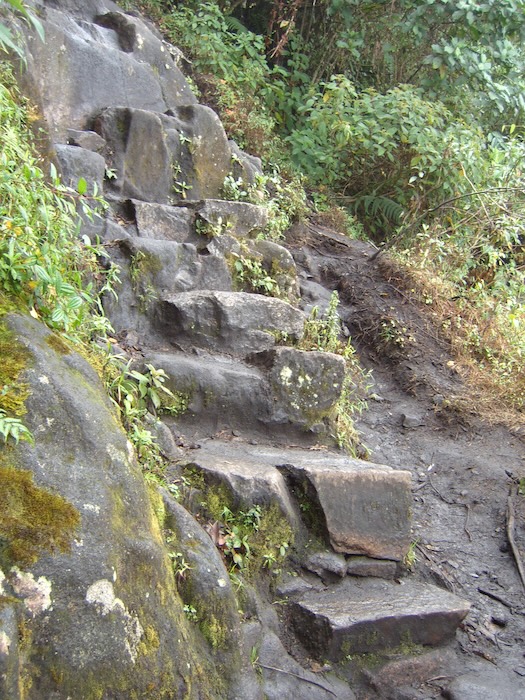
The trail up is the original Inca path, which means uneven stone steps, steep dropoffs, and a lot of vertical gain at over 8,000 feet of elevation. I was not the only person stopping to catch my breath, which was a comfort. The guidebooks say 45 minutes to an hour. I took a little over an hour, between the altitude breaks and stopping to take photos.
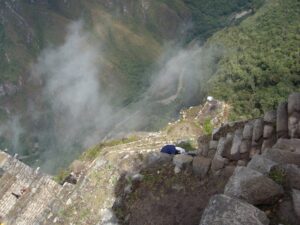
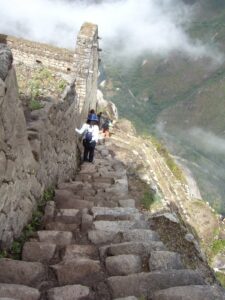
I'm not going to lie - for someone that usually doesn't have much of an issue with heights, this one tested my comfort level. One thought that kept passing through my mind was that I was hiking this solo and there were numerous terraces and stairs that seemed to drop off a mountain. If I fell, when would someone notice and how on earth would they find me? In spite of those thoughts, I kept going. No way was I going to miss this experience if I could help it.
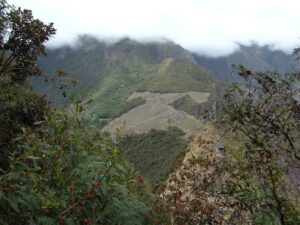
The clouds were low when I started. Huayna Picchu was mostly obscured, and Machu Picchu below was wrapped in morning mist. I kept hoping they would burn off. I kept climbing anyway.
Near the top, the trail goes through a cave. Not metaphorically: you take off your backpack, crouch down, and crawl through a narrow opening in the rock. On the other side is a ladder up to a flat-topped boulder with a crowd of people on it, all looking down into a valley of clouds. Some of them had been sitting there a while, waiting.

When the Clouds Parted
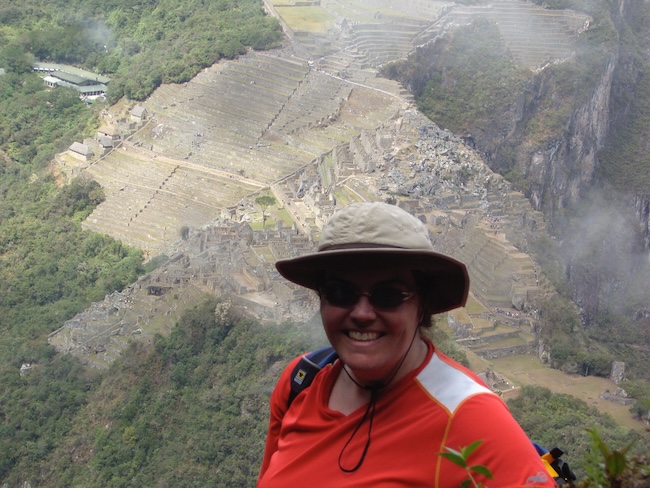
I wandered the upper ruins for a while, exploring the construction at the top of this improbable mountain, marveling at the fact that people built things up here at all. Then I glanced over toward Machu Picchu and the clouds were moving.
They parted slowly, then all at once, and there it was: Machu Picchu spread out below in full sun, the whole site visible from above in a way you simply cannot see from within it. Hawks were flying at eye level. The Urubamba River wound through the valley far below. The Andes surrounded everything. I stood there longer than I probably should have given the train schedule, and I did not care at all.
It is one of the best views I have ever seen from anywhere. I say that without exaggeration and having thought about it for a long time since.
The Way Down
The descent was its own adventure. The stone steps are uneven, narrow, and damp, with no handrails and variable heights. Everyone took it slow and steady, which is the correct approach and also the only approach that ends well. The trail leveled out eventually and I hiked back through Machu Picchu to the bus, slightly muddy, very hungry, and extremely glad I had set that alarm.
I met up with the group in Aguas Calientes, ate an embarrassingly large lunch, and we made our way to the train station for the ride back to Cusco. On the train, the staff put on a show: traditional Peruvian music, a man in full ceremonial dress dancing with a ribboned hat and a small stuffed llama, followed immediately by an alpaca fiber fashion show set to thumping dance music. It was surreal in the best possible way and made the three hours pass quickly.
On Huayna Picchu tickets: These sell out far in advance and require a separate ticket from general Machu Picchu admission. Only 400 people per day are permitted. Book as early as possible, ideally months ahead during peak season. Entry is split into two waves; the first starts at 7am. Verify current ticketing procedures before your trip, as the system has changed over the years and will likely continue to evolve.
On the climb itself: It is rated moderate but feels harder at altitude. Bring water, wear grippy shoes, and do not attempt it if you are genuinely uncomfortable with heights or exposed edges. The dropoffs are real. That said, the trail is well-traveled and people of varying fitness levels make it every day. Go slowly, take breaks, and keep going.
On timing: Earlier is better for two reasons: cooler temperatures and the chance that morning clouds burn off during your climb rather than after you come down. Pack a snack. I forgot mine and deeply regretted it.
Up next: we leave the mountains behind and head into the Amazon. Trading altitude for humidity, stone ruins for jungle lodges, and llamas for piranhas.