Rome: Art, Ancient Stones, and Two Priests Who Saved the Evening (1/4)
From the Travel with Sheridan archives: This story comes from my 2007 Europe trip. Places, prices and logistics reflect the trip as I experienced it then.
“I’ve always wanted to go to Europe.”
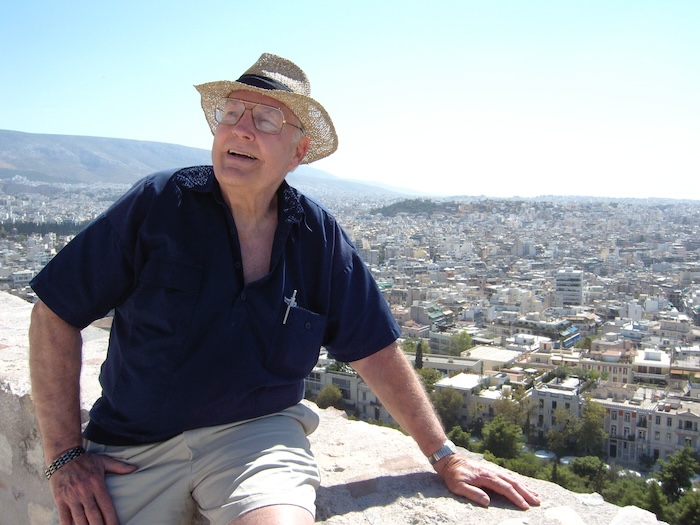 My dad uttered those words after I finished telling him about my trip to Thailand the year before. The next words out of my mouth were, “Well, let’s go next year,” and the plan was hatched. Over the next few months, I let him pick where he wanted to go. His choices were Rome and Greece. My younger brother Scott decided to come along too, so the dates were picked, plans were made and the three of us were off.
Traveling with Dad did add another layer to the planning. He was in his 70s and diabetic, so I knew I needed to keep an eye on how he was doing and be prepared if his blood sugar became a problem. That didn't mean we weren't going to Europe. It simply meant there were a few additional things to think about while we did it.
Dad and Scott arrived in Los Angeles from their respective states, and we departed LAX for London. “London??! But you said Rome and Greece.” I did. However, I had found a lovely new business-class airline called MAXjet that flew from LAX to Stansted for a lot less than business class on the other airlines. Why did I want business class? You ever cram into coach with two six-foot-something men? It is not pretty, especially for nine-plus hours. This gave us more room and a comfier flight. The crew was friendly and fun, and the lounge made waiting much more pleasant. Well worth the money, in my book.
Flying through England also gave Dad and Scott a little glimpse at London and the odd experience of driving on the other side of the road for the first time. We took the bus from Stansted Airport to our hotel outside Gatwick, spent the night and caught our morning flight to Rome.
We flew British Airways into Rome and met the driver the hotel had sent for us. The first thought out of my head was, “Oh, my, those Roman men are lovely!” Yeah, he was a poster boy for Roman genetics—salt-and-pepper hair, olive skin, bright blue eyes, wool sweater, slacks and the accent. But I am off track here, sorry.
Then we had to figure out how to get four adults and all of our luggage into the car. Dad had brought a giant suitcase, which did not make this particularly easy. There was the driver, Dad, Scott and me, plus everything we'd brought for the trip, all needing to fit into the hotel car. Somehow we managed to cram everyone and everything in and headed toward Rome.
We arrived at the Grand Hotel Del Gianicolo in Trastevere, which was lovely and within walking distance of the main area. Trastevere was away from a lot of the chaos around the Vatican and Colosseum and had a charm and warmth I liked immediately, with ancient streets that were sometimes little more than walkways and stairs and plenty of wonderful little restaurants and shops. Piazza Santa Maria became a favorite spot, particularly at night when a small string quartet played classical pieces near the fountain. We drank wonderful Italian wines, ate amazing food and simply enjoyed the ambience.
Getting there our first night was a little more complicated. We were wandering around trying to find our way “straight down the road” to the piazza without realizing that straight down the road eventually meant going down the stairs the road became as it descended Gianicolo Hill. Sound confusing? It was...but that is part of the fun of old cities.
Normally I don't mind wandering around a city when I don't quite know where I'm going, but we'd already done a lot of walking and I was starting to worry about Dad's energy level. He was in his 70s, we were still adjusting after the travel to Europe and we'd been on our feet quite a bit. As we became more frustrated—and I became more concerned about how much longer Dad really wanted to keep walking—I saw two clergymen approaching. Hoping they spoke at least a little English or could point us in the right direction, I went up to ask for directions.
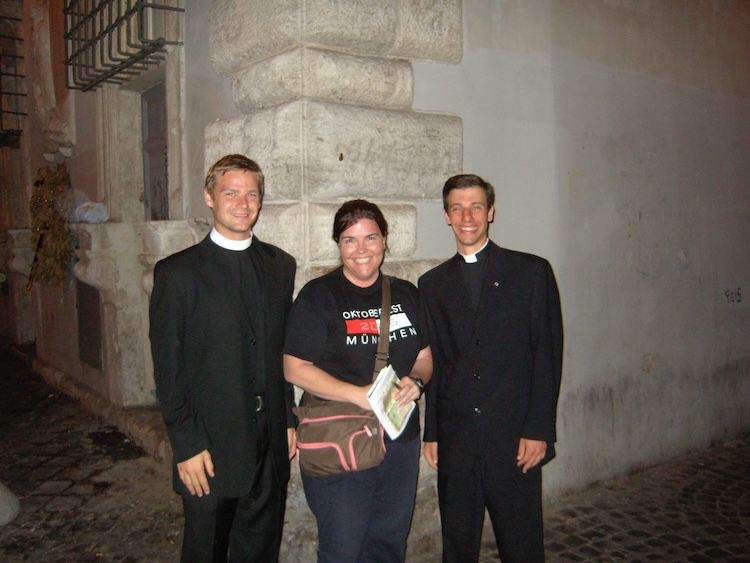 As luck would have it, they were two clergy studying at the Vatican from America. Woohooo! They were as pleased about us speaking English as we were them. It makes directions much easier. Their names were Ian and Phil, and rather than simply pointing us in the right direction, they actually walked us there.
Each had already been in Rome for a few years, and as we walked they gave us little tips about the city and told us a bit about life at the Vatican. They pointed out sites along the way, including the Basilica of Santa Maria and a fabulous gelato shop nearby, and suddenly the trek became much more interesting. I was also relieved that we were no longer wandering aimlessly and knew we were actually getting Dad somewhere he could sit down.
It was particularly amusing when one of them pointed out areas where “we did not want to go,” but skirted around exactly why. Finally I asked if we didn't want to go there because of random gunfire or debauchery.
Debauchery.
Good to know.
We parted ways and headed to La Scala for wine, pizza and pasta. By then I was happy to get Dad off his feet for a while, and our inability to follow what had sounded like very simple directions had given us one of the more memorable encounters of our first days in Rome.
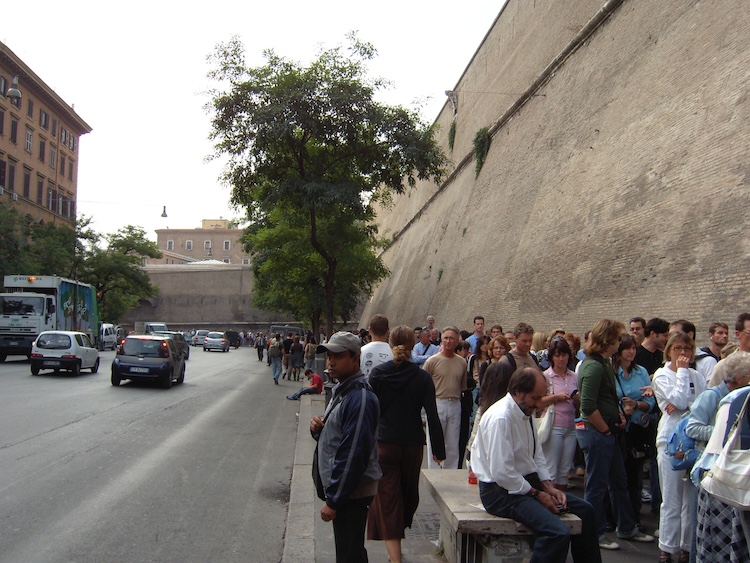
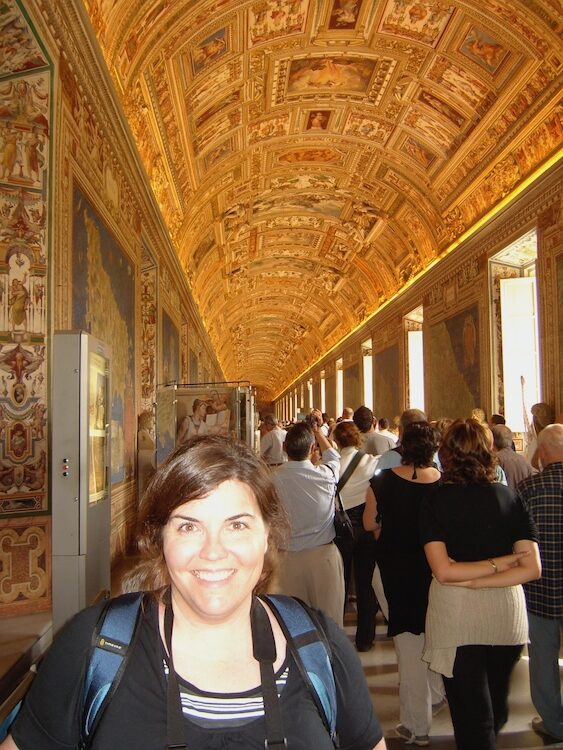
The next morning after breakfast we headed off to see the Vatican. I had heard about the lines to get in, but until you actually see one, you almost picture a line for a roller coaster—stanchions, single file and reasonably orderly. This was a line about ten to twenty people wide running along the streets surrounding the Vatican for blocks. We trekked to the end and joined the herd. It moved relatively quickly considering the sheer number of people, and we waited about an hour and a half before getting into the museum.
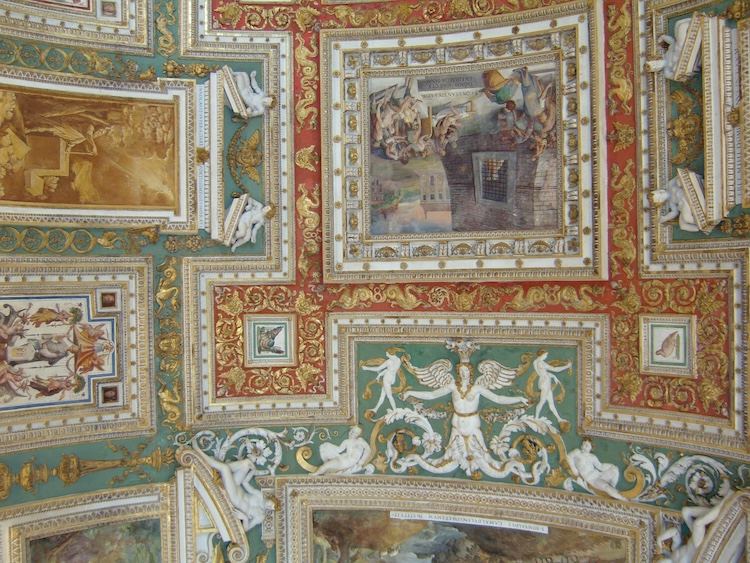
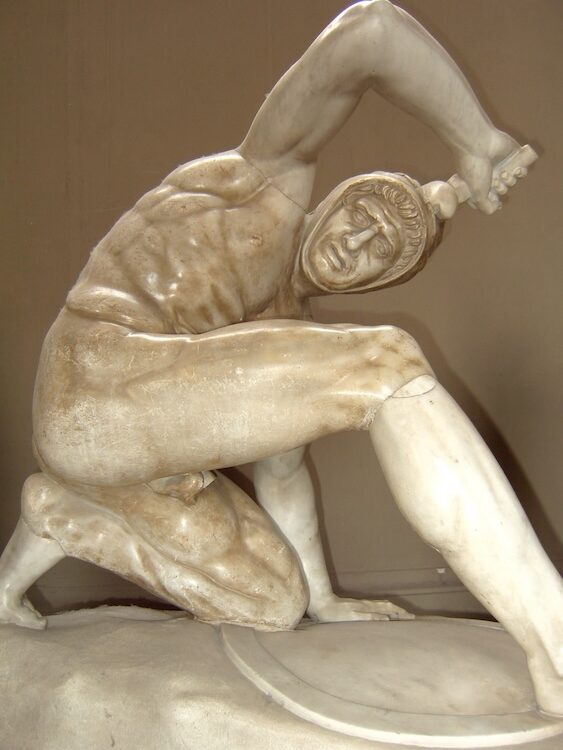
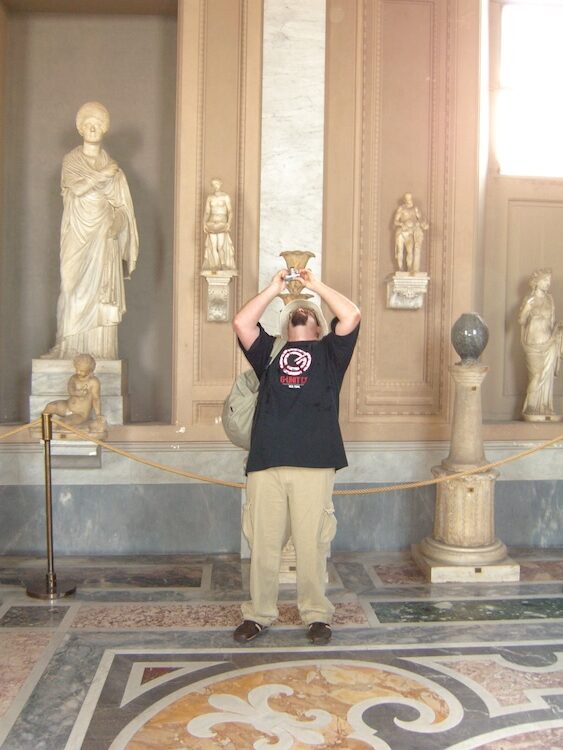
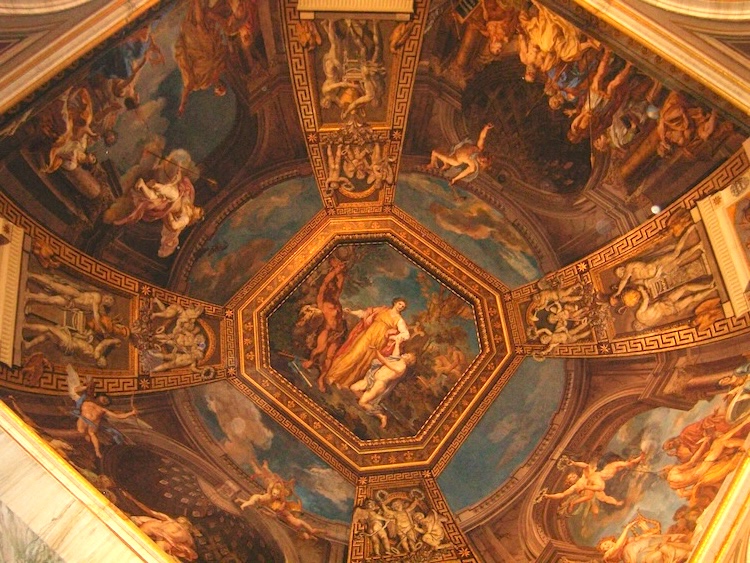
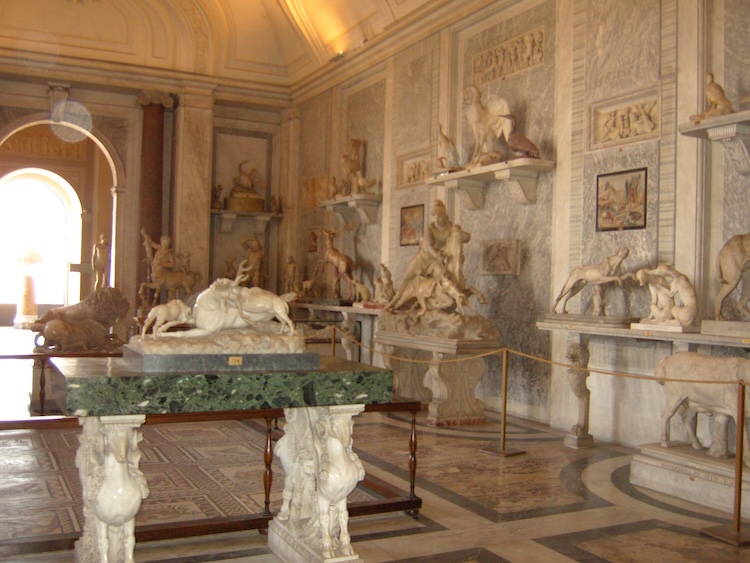
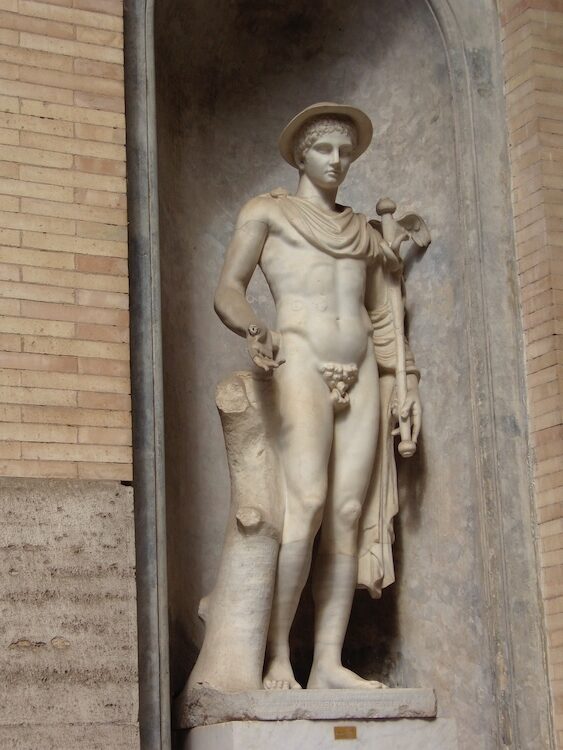
I really had no idea what was inside the Vatican other than the Sistine Chapel, St. Peter's Basilica and the Pope. I knew the Sistine Chapel alone would be worth seeing, but I hadn't expected the hallways leading to it or all the statuary filling seemingly every available nook. The frescoes were breathtaking. I could have spent an entire day just studying the paintings on the ceilings and walls before ever reaching the chapel, although the sheer volume of people meant you were almost herded along like cattle.
The Sistine Chapel itself was spectacular, but the experience inside was also a little comical. There were no photos allowed and everyone was supposed to remain quiet. Inevitably, someone would take a picture or the volume would begin to rise and one of the attendants would yell, “NO PHOTO!!” or “QUIET!!” Everyone would hush for about a minute. Then more people would enter the chapel in awe, start talking about what they were seeing, someone else would attempt a photo and the yelling would begin again. Unfortunately, it took away a little from the experience of standing beneath that extraordinary ceiling, but I also couldn't help finding the cycle amusing.
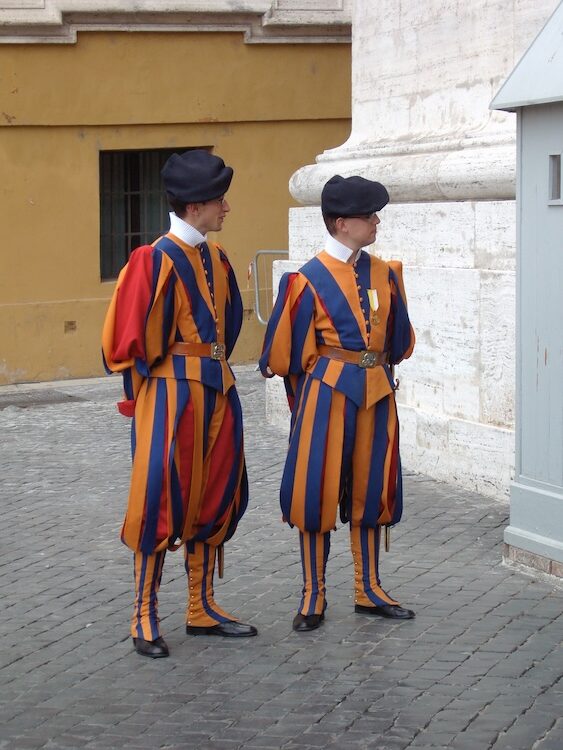
Already on sensory overload, we headed to St. Peter's Basilica, another enormous space filled with art, statuary and history. On the way out, Scott picked up some small containers at the gift shop and filled them with holy water to take back to a friend. From there we walked into St. Peter's Square, passing the entrances guarded by the Swiss Guards. Looking at them, you are inclined to giggle a bit at the traditional uniforms that almost resemble circus outfits. They may be very serious guards, but those uniforms are something.
After a late lunch, we headed back to the hotel for a rest before making our way into Trastevere again for dinner. The following morning it was time for the Roman Forum, Palatine Hill and the Colosseum.
The remains of ancient Rome were astounding, not only because of the temples, arches, basilicas and other structures still standing, but because of where they were standing. They sit in the middle of a chaotic city enveloped in the modern world—a bit like a defiant rock trying to hold off a landslide. Palatine Hill was more archaeological site than intact ancient city, but that rawness made it interesting. From above we could look across Rome and see the ancient and modern almost piled on top of each other.
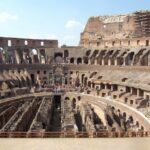
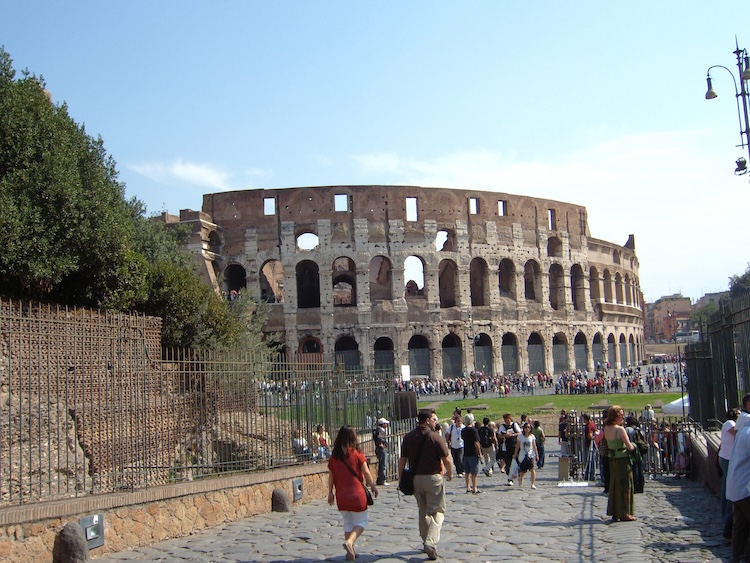
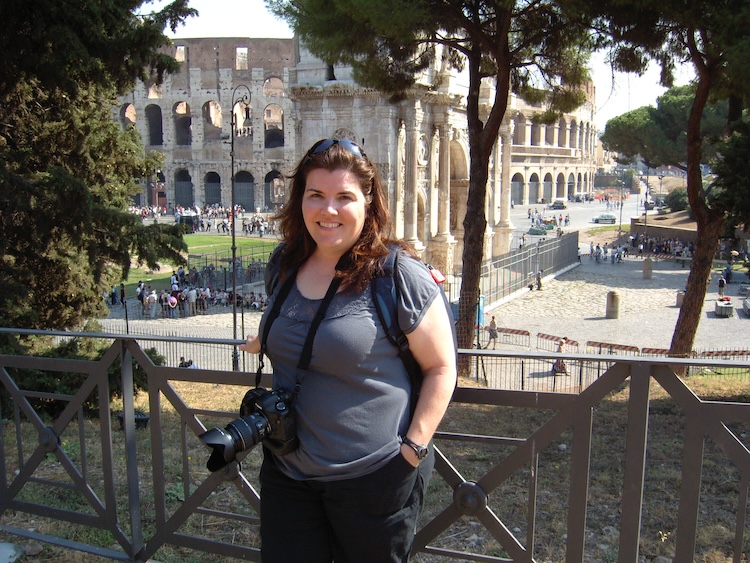
As we approached the Colosseum, the crowds grew thicker, but that didn't take away from its grandeur. In person it was impressive, although perhaps not quite in the way gifted photographers would lead you to believe. Now, it IS impressive, but it is also flanked by a busy road, large modern buildings and a herd of people. Photographers are quite good at making all of those things disappear.
It reminded me a little of the first time I saw the Alamo. I'd seen photographs of it that made it seem as though it stood alone as this historic monument, and then you get there and discover modern San Antonio wrapped around it. Seeing the Colosseum sitting in the middle of everyday modern Rome gave me a similar feeling.
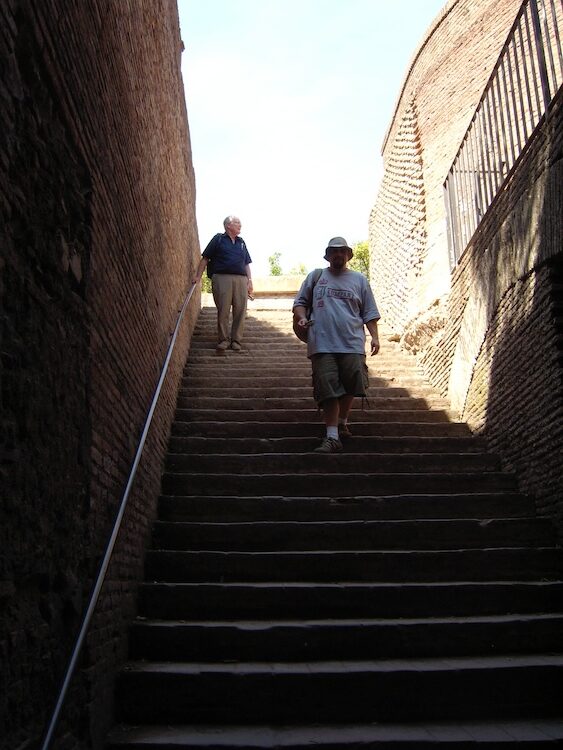
Once inside, there were two levels we could walk through, with steep stone stairs leading to the upper level. One of the things that fascinated me was the wear in those stairs. You could actually see dips in the solid stone where countless feet had passed over the same places. I find things like that fascinating. Knowing something is ancient is one thing; actually seeing the physical wear left behind by all those people is another.
Inside, we could also get a better sense of how the Colosseum had originally been arranged, with remnants of the seating and the more elite political boxes. Some of the politicians' names could still be seen carved into stones lying around the lower level. Those smaller details—the worn stairs, names carved into stone and remnants of places where people actually sat—made it easier to imagine this as a place people once used rather than simply a monument we were touring.
After all that walking, we caught a cab back to the hotel and began getting ready for Florence. Before we left Rome, though, Dad's diabetes went from something I was keeping in the back of my mind to something we actually had to deal with.
His blood sugar dropped significantly at the hotel. I knew what his drops looked like and knew what to do, and we had brought an emergency glucagon syringe with us. I administered it and stayed with him while his blood sugar began moving back toward normal. It worked, but it was the only emergency syringe we'd brought.
I asked the hotel for a later checkout so Dad could rest and for directions to the nearest pharmacy. Since my Italian wasn't up to explaining exactly what I needed, I took the used syringe with me so I could show the pharmacist. Fortunately, I found someone who spoke English and was able to buy two replacement glucagon syringes for about €10 each. I remember being amazed because they had cost roughly ten times that much at home.
When I got back, Dad was doing better. We had replacement medication, he had had some time to rest, and we could continue with the trip.
Including the giant suitcase.