Chiang Mai: Temples, Elephants, and the Frog Ladies of the Night Market (1/4)
Northern Thailand’s most beloved city rewards slow exploration, a willingness to try strange food, and a decent haggling instinct.
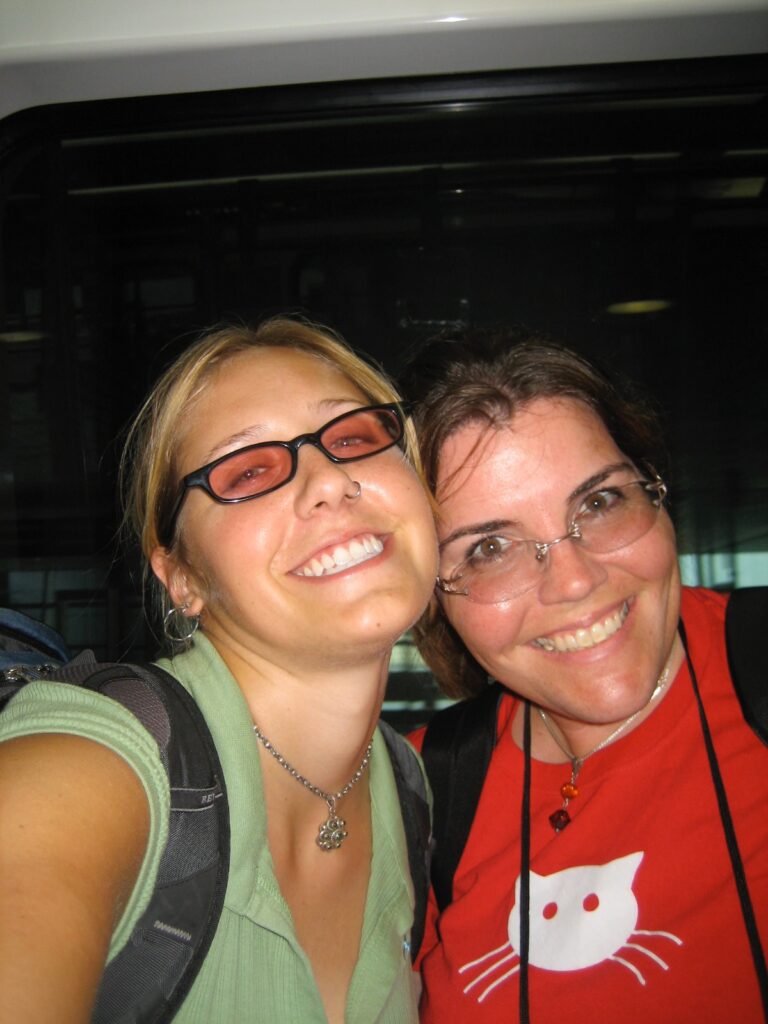 My first trip to Southeast Asia began with a LONG flight. Sarah and I left on October 23 for a 17-plus-hour nonstop flight to Singapore, and almost immediately I was impressed with the Asian airlines. We were in what Singapore Airlines called “executive economy,” somewhere between economy and business, and the seats were comfortable, the food was good and the service was exceptional. There were movies, television shows, music and even video games to help fill an enormous amount of time before we finally landed at 5:20 in the morning.
Changi Airport made quite a first impression. It was clean, efficient and surprisingly beautiful, with an orchid garden, koi pond, fountain and bridge right in the terminal. Immigration was easy, which was fortunate because we weren’t actually staying in Singapore yet. We changed some money and headed directly for the train station to catch the 8:20 express to Kuala Lumpur.
The six-hour train ride cost us about $18 each and gave us our first real look at the region. Outside the windows was the dense tropical landscape of southern Malaysia, broken by farms, small villages and simple homes that looked very different from what we were used to. Even some of the homes without glass windows had television sets inside. It was the beginning of several weeks of noticing things that challenged whatever assumptions I’d arrived with.
Neither of us spoke a word of Malay, but enough signs were also in English that getting around wasn’t terribly difficult. Kuala Lumpur’s enormous, modern train station connected long-distance

trains with the local metro system, and after a few wrong turns we found our way toward the center of town. By then we’d had a 17-hour flight followed almost immediately by six hours on a train, so our hotel-search standards had deteriorated to something close to “the first place that will let us lie down.” We tried the Hotel Istana and somehow our exhausted decision-making landed us somewhere absolutely gorgeous.
It rained that evening, but we explored a little around the hotel before giving in to exhaustion. The next morning I worked on arranging our travel onward while Sarah went to see the Petronas Towers. Then we boarded a Thai Airways flight through Bangkok and on to Chiang Mai. Once again, I found myself impressed by how easy and comfortable the travel had been. I’d expected moving around Southeast Asia to be complicated. So far, it wasn’t.
We arrived in Chiang Mai after dark and took a cab to Tri Yaan Na Ros, also called the Colonial House, a tiny eight-room boutique hotel south of the old city in the silver district. It was even prettier than it had looked online, filled with teak and silk, with the rooms surrounding a peaceful blue-tiled pool and little sitting areas tucked among bamboo and stone statues.
My friend Hiten, who had come from Frankfurt, met us at the hotel. He was the reason Southeast Asia had entered my plans in the first place; he’d encouraged me to come over for Interhash. After a quick shower and change, the three of us headed straight for Chiang Mai’s Night Market. This was our introduction to haggling, and we learned quickly. Everywhere we walked there were calls of “Hello, madame!” and “Come look!” mixed with the distinctive croaking noises coming from little wooden frogs. The frogs belonged to the women we quickly christened the “frog ladies”—small Thai women in headdresses carrying trays of bangles, trinkets and those noisy little wooden frogs. If we slowed down too much, they sometimes descended on us in packs.
We eventually found an Indian restaurant called Le Spice for dinner, where the owner’s son, Fayid, came out to talk with us and offered suggestions about places to go. We also took our first tuk-tuk rides, rattling around Chiang Mai in what amounted to a motorcycle with a passenger cab attached. They would become a very familiar part of the trip.
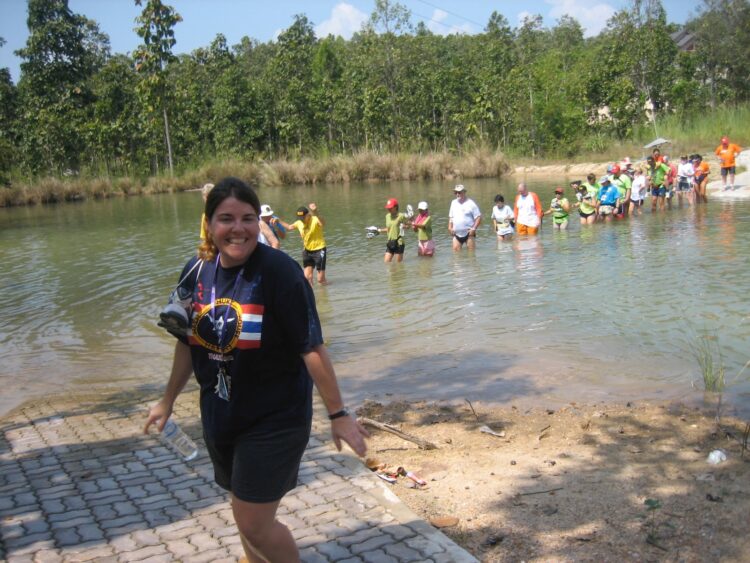
The next morning was the Thinking Drinking Hash run. We caught buses from the Empress Hotel out toward the university and spent the day running—or something resembling running—through the surrounding wilderness. The route took us through a shallow river, dry stream beds and a beautiful bamboo forest before lunch and the bus ride back. For anyone unfamiliar with the Hash House Harriers, explaining everything that happens around a Hash is difficult. My original journal’s advice was essentially “go Google ’em,” and I’m comfortable leaving it there.
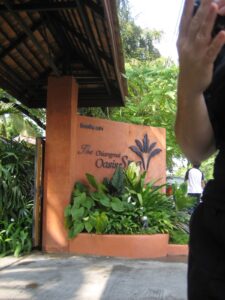 After more wandering and shopping, Sarah and I devoted part of Saturday to the Oasis Spa, where we spent a few hours being scrubbed and massaged before attempting anything remotely cultural. Properly pampered, we headed to Wat Phra Singh inside the old city. Sarah met a young novice monk and talked with him for a while, while I wandered through the gardens, where Buddhist teachings were scattered among the grounds and orange-robed monks moved quietly between the buildings. After the noise and activity of the markets, the temple felt extraordinarily peaceful.
We wandered farther into the old town afterward, finding handmade silks and various other things we probably didn’t need, then caught another tuk-tuk back to the hotel. Sarah decided to rest, but I headed back to the Night Market and met Hiten and Fayid. Later, Hiten and I went bar-hopping and ended up at the Riverside, where the bartenders apparently had all watched Cocktail and taken notes. Bottles were flying through the air and tricks were happening behind the bar while we watched.
Our last big Chiang Mai adventure had been Sarah’s idea. One of the things she really wanted to do was ride an elephant, and at the time my response was basically: who am I to argue with something that cool? The day began with an elephant show where the animals kicked balls, painted pictures and performed various tricks. Then we climbed aboard for a slow, swaying ride through the countryside, passing rural homes and thick vegetation. Small stands along the route sold bananas and sugar cane for the elephants, and at one point our trainer stopped to take pictures of us.
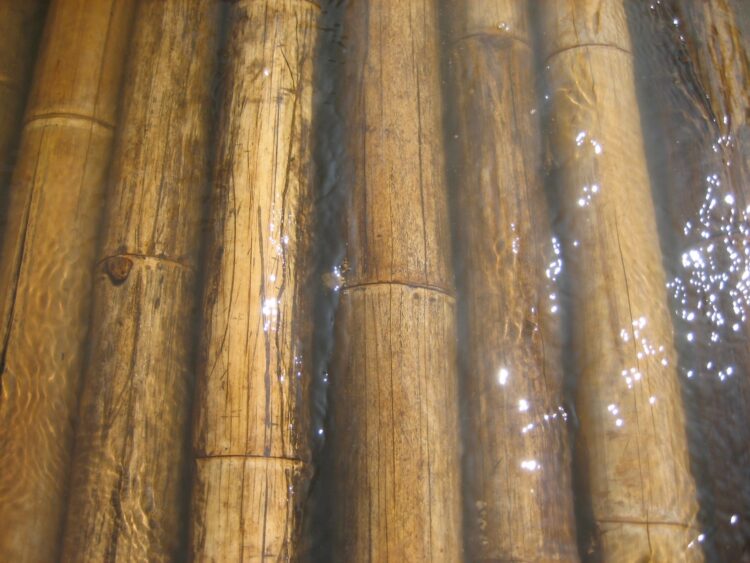
After the ride we had lunch by the river and switched to an oxcart, which was considerably less smooth. It was interesting for a little while; I couldn’t imagine riding one for any serious distance to market. The cart took us to a small mountain village where several people had booths selling jewelry, textiles and handicrafts. Then we traded the oxcart for a bamboo raft. Water crept up between the pieces of bamboo as we floated down the river, which was mildly disconcerting even though the raft seemed perfectly happy about the arrangement. We met a Thai girl named Mam who was cute as can be and happy to chat with us. Along the river were homes tucked into the jungle. They weren’t huge or fancy, but there was something beautiful about their simplicity and the landscape around them.
The day finished at an orchid and butterfly farm. The quantity of orchids was staggering—rows and rows of flowers hanging in pots in seemingly every color and shape imaginable. You could even buy lacquered orchids in the gift shop to take home. The butterflies were less cooperative and mostly seemed to hide whenever people entered their “house.”
A present-day note belongs here because this trip happened nearly two decades ago. My understanding of elephant tourism has changed considerably since then. Today I would look carefully at animal-welfare practices and choose an experience centered on observing elephants in a more natural environment rather than riding or performances. That doesn’t change what I experienced then, but it does change what I would choose now.
After the tour, we rushed back to the hotel, checked out and headed for the train station. Our next destination was Bangkok, and we were getting there aboard an overnight train. I’d expected second-class overnight rail to be considerably more rustic than it turned out to be. Our tickets were about $40 for the two of us, and the upper berths were actually long enough to lie down comfortably. When we boarded, everyone sat in the lower seats. Around seven, the porter came through, lowered the berths, made up the beds and transformed the entire car for the night. Curtains closed and people read, talked quietly or went to sleep. The air conditioning worked well enough that I actually got chilly.
I spent part of the journey talking with a Thai man who had met and married an American woman about 30 years earlier and now lived in Tulsa. He was back visiting family and talked about his daughter, who was away at college, and his life in the United States. He also gave us one rather useful piece of information: there were three stops in Bangkok, and we needed to figure out which one was ours. Eventually we decided on the last stop, climbed off at Bangkok’s main rail terminal and found a taxi to our hotel. Bangkok was next.